More than immersion: VR experiences that transformed how I connect with people
Have you ever felt truly present during a video call? I didn’t either—until I tried virtual reality. It wasn’t about gaming or flashy visuals. It was a quiet moment with my sister, thousands of miles away, where we finally felt like we were in the same room. VR didn’t just change how we talked—it changed how we listened, laughed, and shared silence. This is not science fiction. It’s real, it’s here, and it’s reshaping everyday communication in ways I never expected.
The Distance That Words Can’t Bridge
Remember that Sunday evening check-in with your mom? You’re juggling dinner prep, your youngest is crying in the background, and your screen shows a grid of tired faces from different time zones. You say “I’m fine” even when you’re not. Everyone’s talking, but no one really feels close. That was my life for years—trying to hold family together through pixels and Wi-Fi signals. I thought if we just kept calling, kept showing up, that would be enough. But over time, something subtle slipped away: the sense of being together.
My sister moved to New Zealand for work, and while we texted daily and video-called weekly, our conversations started to feel rehearsed. “How’s the weather?” “Did the kids sleep okay?” These questions kept the connection alive, but they didn’t feed it. I missed the way she’d raise an eyebrow when I said something silly, or how she’d lean in when I shared something serious. On video, those gestures were lost. Our calls became transactional, not emotional. I began dreading them—not because I didn’t love her, but because I felt helpless to make them better.
Then a friend invited me to a “VR hangout.” No agenda. No presentations. Just, “Come put on a headset and say hi.” I almost said no. I associated VR with gaming, with teenage boys shouting in headsets, not meaningful connection. But something in me was tired of settling. So I borrowed a headset, followed the setup guide, and stepped in—tentatively—into a small digital living room. And in that moment, something shifted. I didn’t see a screen. I saw people—avatars, yes, but ones that stood, turned, gestured, and looked right at me. One friend waved. Another handed me a virtual coffee mug. I laughed—actually laughed—because it felt… normal. For the first time in months, I didn’t feel like I was performing connection. I felt like I was living it.
Stepping Into a Shared World
That first VR gathering wasn’t flashy. The space looked like a cozy cottage with soft lighting, a fireplace, and comfortable chairs. But what struck me wasn’t the design—it was the feeling of presence. When someone spoke, they turned toward me. When I raised my hand to speak, they paused. If I looked down, they’d ask, “You okay?” just like in real life. These weren’t programmed responses. They emerged naturally because the environment allowed for human rhythm.
Let me explain what made it different. On video calls, we rely heavily on facial expressions, but even those get cropped or delayed. In VR, your avatar mirrors your voice and basic head movements. When you speak, your avatar’s mouth moves. When you nod, it nods. When you turn your head to look at someone else, everyone in the room knows where your attention is. This might sound small, but it changes everything. Suddenly, you’re not just hearing words—you’re sensing attention, interest, hesitation. You’re not a floating head in a box. You’re a person in a space.
And then there’s the sound. Spatial audio means voices come from where the person is standing. If someone speaks from your left, their voice comes from the left speaker. If they move behind you, you hear them shift. This might seem like a technical detail, but try remembering the last time someone laughed from across the room and you turned instinctively. That’s what VR gave back—the physicality of conversation. I realized how much of communication happens outside words. A shared glance. A pause before answering. The way someone leans back when they’re skeptical. These micro-moments had been missing, and their return made me emotional in a way I didn’t expect.
That night, I stayed in VR for nearly an hour—longer than I’d spent on a video call in months. When I took the headset off, my neck was stiff, but my heart felt lighter. I hadn’t just talked to friends. I’d been with them. And for the first time in a long time, distance didn’t feel like a wall. It felt like a space we could still share.
When Communication Becomes Effortless
We don’t talk about how tiring digital communication is. But think about it: on video calls, we have to work harder to feel heard. We over-express our faces—big smiles, exaggerated nods—because we’re not sure if our tone comes through. We interrupt less because we can’t read pauses well. We miss cues, so we second-guess everything. It’s exhausting. Psychologists call it “Zoom fatigue,” but I think it’s more than that. It’s emotional labor without the payoff of real connection.
What surprised me about VR was how little effort it took to feel understood. One evening, I joined a family call in VR—my mom, my sister, and me. We were talking about her garden back home. She mentioned how the roses weren’t blooming this year. On a regular call, I might have just said, “Oh no, that’s too bad.” But in VR, I saw her avatar pause. Her shoulders dropped slightly. She looked down at her hands. And in that moment, I knew—this wasn’t just about roses. It was about routine, about care, about something familiar slipping away.
So instead of brushing it off, I said, “That must be really hard. You’ve put so much love into those plants.” She looked up, her avatar’s eyes meeting mine. “It feels like I’m losing a part of summer,” she said quietly. That conversation went deeper than any we’d had in months. Because VR gave me the cues I needed to respond with empathy, not just words.
This is the quiet power of VR: it restores the subconscious signals we rely on. Posture. Proximity. Voice direction. When someone stands closer, it feels like they’re leaning in. When they step back, it feels like they need space. These aren’t tricks—they’re the language of presence. And when that language returns, communication becomes lighter, more natural, more human. I’m not saying VR eliminates miscommunication. But it reduces the friction. It lets the real stuff—care, concern, joy—flow more freely.
Building Emotional Bridges Across Generations
When I told my parents I wanted them to try VR, my dad said, “I can barely work the TV remote. You think I’m going to wear a helmet to talk to you?” I laughed, but I got it. Tech can feel alienating, especially when you didn’t grow up with it. But I also knew they missed us—really missed us. Phone calls were hard for my mom; she’d forget to unmute or get confused by the screen layout. Video calls left her feeling overwhelmed. She’d say, “I just want to see your face,” but the lag and frozen images made it worse.
So I set up a simple VR dinner. I helped them get a user-friendly headset—one with easy setup and comfortable fit. I walked them through the steps over the phone, slowly. And when they finally joined, I held my breath. What if it was too much? What if they felt silly?
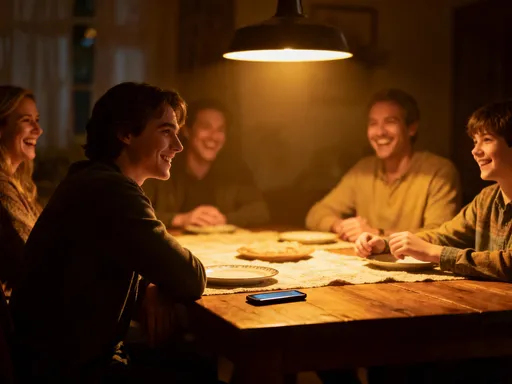
But then I saw them. My mom’s avatar wore her favorite sweater. My dad’s had his baseball cap. We were all sitting around a virtual table, plates in front of us, a sunset in the background. I passed my mom a virtual salad. She laughed. “This is ridiculous,” she said. “But… I can see you. I can see where you’re looking.”
We didn’t talk about deep things that night. We talked about the weather, the dog, what I’d cooked for dinner. But the difference was in the silence. In past calls, silence felt awkward, like we had to fill it. Here, it felt comfortable. We could just… be. Afterward, my dad said, “It felt like you were really here.” Not “almost,” not “kind of.” Really here. That one sentence undid years of frustration.
What I didn’t expect was how VR became a bridge for them, too. My mom started joining weekly VR meetups with her sister, something she’d never done with video calls. She said it felt “less formal,” more like visiting. My dad, who used to avoid calls, now asks, “When’s the next one?” It wasn’t the technology that won them over. It was the feeling—the sense that they were part of the moment, not just observing it.
Work and Play: Where Connection Meets Purpose
At first, I thought VR was just for family. But then my remote work team started using it for meetings. I was skeptical—wasn’t this just another tech trend? But within one session, I realized how different it felt. We met in a virtual conference room, yes, but we could also move around, gesture, and see who was engaged. No more guessing if someone was listening. No more multitasking because the screen was “off.” In VR, you’re either present or you’re not. And that made us more focused, more collaborative.
But the real surprise was the casual stuff. We started adding 10 minutes at the end of meetings just to hang out—walking through a digital beach, tossing a ball, or sitting by a virtual campfire. These weren’t “work” activities, but they built trust. We laughed more. We shared more. We remembered we were people, not just productivity units.
And with friends, VR became our new “coffee date.” We’d meet in a virtual park, stroll through a digital forest, or play simple games like mini-golf or puzzles. It wasn’t about winning. It was about doing something together. One friend said, “I feel like we’re actually spending time, not just catching up.” That stuck with me. Because so much of adult friendship becomes transactional—quick texts, rushed calls. VR gave us back the luxury of shared experience.
What I love is how VR blends purpose and play. It’s not all serious meetings or deep talks. Sometimes it’s just laughing because your avatar tripped over a virtual rock. But those moments matter. They’re the glue. And when connection feels light and joyful, it doesn’t drain you. It fills you.
Making It Work in Real Life
Let’s be honest: the idea of adding another screen, another device, another app to our lives can feel overwhelming. I felt that too. But here’s what I’ve learned—VR doesn’t have to be perfect to be powerful. We started small. We chose platforms that were simple, intuitive, and didn’t require high-end gear. We picked headsets that were comfortable—even my mom could wear hers for 30 minutes without discomfort.
We also kept it low-pressure. No forced agendas. No long sessions. Our family VR time is usually 20–30 minutes. We call it “digital porch time”—just showing up, no big plans. Sometimes we talk. Sometimes we don’t. The goal isn’t efficiency. It’s presence.
Cost was a concern at first. But many headsets are now affordable, and some libraries or community centers even lend them out. We started with one shared device. Now, more of us have our own, but it wasn’t an overnight investment. And screen time? We treat it like any other screen—mindful, intentional, not excessive. The difference is, this screen doesn’t leave me drained. It leaves me connected.
The key was making it a habit, not a chore. We set regular times—Sunday evenings, Wednesday lunches—so it became part of our rhythm. We invited people gently, without pressure. And we celebrated small wins: my dad learning to wave, my niece teaching her grandma how to pick up a virtual book. These moments weren’t about tech mastery. They were about togetherness.
A New Normal of Togetherness
I used to think closeness required proximity. That to really feel connected, we had to be in the same room, sharing air, seeing each other’s faces without delay. And while nothing replaces that—nothing ever will—I’ve learned that distance doesn’t have to mean absence. VR hasn’t replaced real visits. But it’s filled the spaces between them with something richer than texts, deeper than calls.
What amazes me is how the technology disappears. After a few minutes, I stop noticing the headset. I stop thinking about avatars. I’m just… with someone. We’re sitting. We’re listening. We’re sharing silence. And in those quiet moments, I feel something I thought was lost: the comfort of shared presence.
Recently, I met a close friend in a virtual garden. We didn’t have a plan. We just sat on a bench, watching digital birds fly by. We talked a little. We didn’t talk a lot. But we were both there—fully, calmly, peacefully. And as I sat in my living room, headset on, I realized: this is what I’ve been missing. Not the words. Not the updates. The simply being together.
VR didn’t teach me how to connect better. It reminded me. It peeled back the layers of digital fatigue and showed me that connection isn’t about the tools we use. It’s about the space we create. And now, thanks to this quiet revolution in how we meet, that space feels bigger, warmer, and more human than ever. If you’ve ever felt alone on a crowded call, I invite you to try it. Not for the tech. Not for the novelty. But for the chance to feel, finally, like you’re really there.